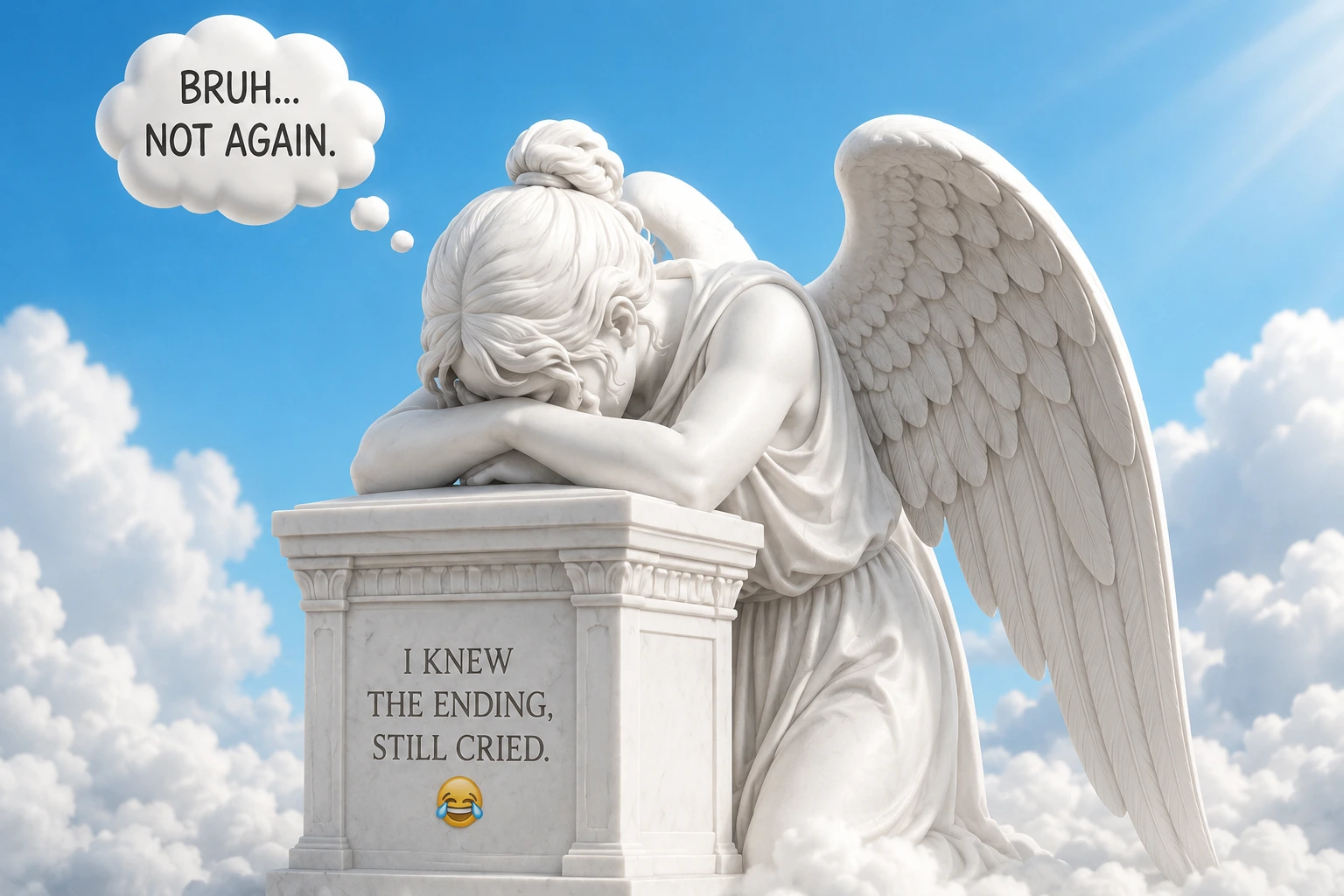
It has always amazed me how we compartmentalize grief, especially berievement. Once I saw in one home, maybe the head wanes away, leaving behind a group of descendants barely being able to process what just happened. But the interesting part is, the wet farewells get varied aesthetics, even when the loss is equal. Why? What's hurting, death itself or the manifested future that never comes?
When I pull back and visualize some of the ways people process the passing of someone they love or knew, taking the scenarios like, ‘I knew this guy,’ ‘she's my sister,’ ‘I just met him yesterday... oh poor soul,’ or even ‘he was meant to propose to me next week’ kind of laments, I realize how profoundly fascinating the pain of losing someone can come to exist. One time I tried segmenting the cause of the emotional whiplash. Kind of like resting the pain on the death itself, our realization that we might not see the departed again, or we just tend to empathize with the fact that they are going to decay underground, and it's that imagery we can't quite process clearly. But with further reflections, I realized every angle brought along its own nuance.
While doing mental workouts on this, I was simultaneously wrestling with the why behind how people mourn the way they do. Why the pattern differs from one tribe to another, county to country. Made me think if the feelings is natural, or just socially engineered. But that was too murky to exist in this blog, so let's push it to the bottom, or leave it be a topic for another day.
Today, we dissect the question that philosophers, psychologists, and religious traditions have all wrestled with for centuries. Beyond the basic, ‘they died, and I'm sad.” I aim to think loudly about the engine behind the way we feel when we do when someone we knew, or can relate to dies. Why we don't grief strangers as much as we do for those who we know, and why death without a story attached to it sometimes feel like another casualty on a news headline.
Is selfishness a bad word? No really. Not after I realized how thin the line separating selfless grief from a selfish one really is. But this is not in the sense of ‘i only care for myself’ kind of selfishness. It's about the central trigger of sadness to the majority of the mourners, the realization that the mourning isn't always about the life cut short, or unfulfilled dreams, but the end of their relationship with them. The closer the bond, the greater the grief naturally shifts toward the living person's loss, the lesser the pain becomes about the welfare of the dead. It's not malicious, it's actually pretty standard. Every relationship is partly built on anticipated future scenes. The sudden termination of deep conversations, shared jokes, arguments and future memories often reduce humans to their basic instincts, which is often about, “This shouldn’t be happening to me."
Anyway, despite knowing that a body has no feelings whatsoever, our own emotional reasoning kind of like lags behind in time for its own reasons. Fully agreeing that it's over isn't as easy as it sounds, and when you finally decide, "what can I do?” then mind goes like, “No, you can't actually think they're going to enjoy the loneliness under the ground, can you? Picture the worms. This is a person you were hanging out with just the other day!” And then we kind of hang on like, "Yes, you’ve got a point…"
Even if we believe they no longer eligible to suffer the way we do, it's still almost impossible to separate the idea of death from the image of a body growing cold, being buried, and decomposing. Our own human rigidity towards detachment convinces our imagination to treat the body as if the person were still somehow experiencing the underworld, even though we intellectually know otherwise. That's why people often say, "It's so sad they're lying alone in the ground." Yes, we empathize with the dead, and in doing so we create lucid imaginations of their pain, and we instinctively get sadder. We mentally place ourselves in the grave and imagine what we would feel there, and it's very fine. We get traumatized 😁
For some people, especially the ardent loyalists to self-preservation, seeing a person stop breathing or being caressed by the mortician in a morgue feels like a trailer of their future states, broadcasted to them live in reality. We are aware of our mortality, but we don't appreciate us being reminded all the time of how inevitable the oblivion is. Is it really an experience? Yes, it becomes one when death quietly reminds us that one day, it's us who will be preserved, right after being stripped 'clotheless.'
It's mortality silence taken to its extreme practical edge. But this is nuanced as well, because as we try to imagine that being us in the future, and I need you to underline 'future', what pushes us to reflect on this has already happened. It's like a future cut short reminds us of a future to come. And while it's instinctive to live that horror, human empathy shines at its best when we see someone living our worst fears.
Humans think in narratives, and every dead person have unfinished story, even the ones who die of natural causes💀. When a story cuts abruptly because the body couldn't take the UV rays anymore, we instinctively imagine the unwritten chapters; the dreams they won't fulfill, the people they won't meet, the life they won't live. When we pull these and lay them bare on ourselves, it takes us to believing of the disillusionment experienced by the dead, and this form of empathy is even funnier.
Next time someone asks, “is death really painful?" Ask, "From whose perspective? The dead or the living?” Because most of the time, the emotional unsettlement is usually not created by the biological fact that a heart stopped beating. It's the thoughts that count anyway. Take the expectations and memories from the equation, what do we have left as emotional humans? So perhaps grief isn't just a reaction to death. It's the price our minds pay for trying to give us lived experiences.
No comments yet — be the first.